

Lower Risk Cannabis Use Guidelines for Psychosis Toolkit
Centre hospitalier de I’Université de Montréal (CHUM)
Applied + Community Research


Centre hospitalier de I’Université de Montréal (CHUM) is one of Canada’s leading academic research institutions, advancing clinical, public health, and addiction research.

Within CHUM, the Laboratoire de recherche Didier Jutras-Aswad conducts pioneering work on cannabis, mental health, and psychosis. The team partnered with Changemark to translate the Lower-Risk Cannabis Use Guidelines for Psychosis (LRCUG-PSYCH) into practical, accessible tools that bridge research, clinical practice, and public education.

Challenge
While cannabis legalization has reduced stigma and expanded access, psychosis remains one of its most serious risks—particularly among youth and frequent users.
Despite strong evidence, harm reduction guidance for psychosis prevention wasn’t reaching clinicians or young people. Barriers like stigma, inconsistent messaging, and a lack of youth-appropriate tools made it difficult to translate guidelines into meaningful conversations about cannabis use.

Solution
CHUM partnered with Changemark to design and disseminate a suite of bilingual, evidence-informed knowledge products that make the LRCUG-PSYCH guidelines usable in both clinical and public settings.
Working closely with clinicians, researchers, and people with lived and living experience, we created tools that:
Encourage open, non-judgmental conversations about cannabis and psychosis;
Promote harm-reduction-oriented care and reduce stigma in clinical settings; and
Provide youth-friendly content to support informed decision-making.
The project emphasized user-centered design, language accessibility, and harm-reduction principles to ensure each product resonated across audiences.
The project included:
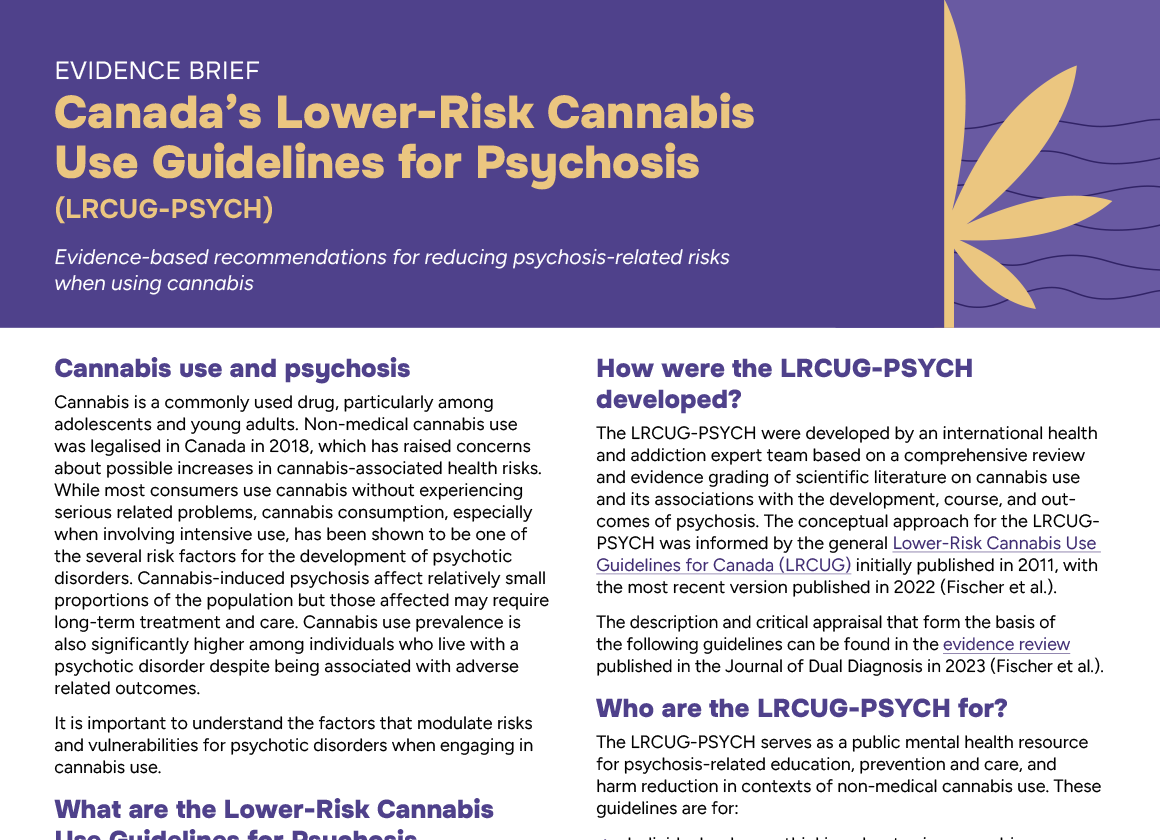
Evidence Brief + Brochure
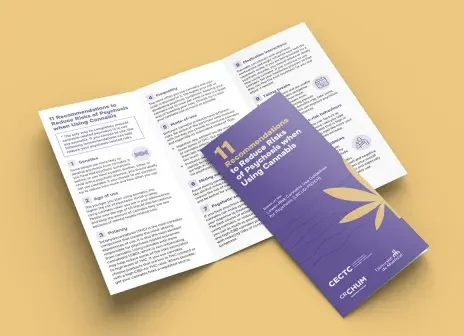
LRCUG-PSYCH Brochure (EN) (FR)
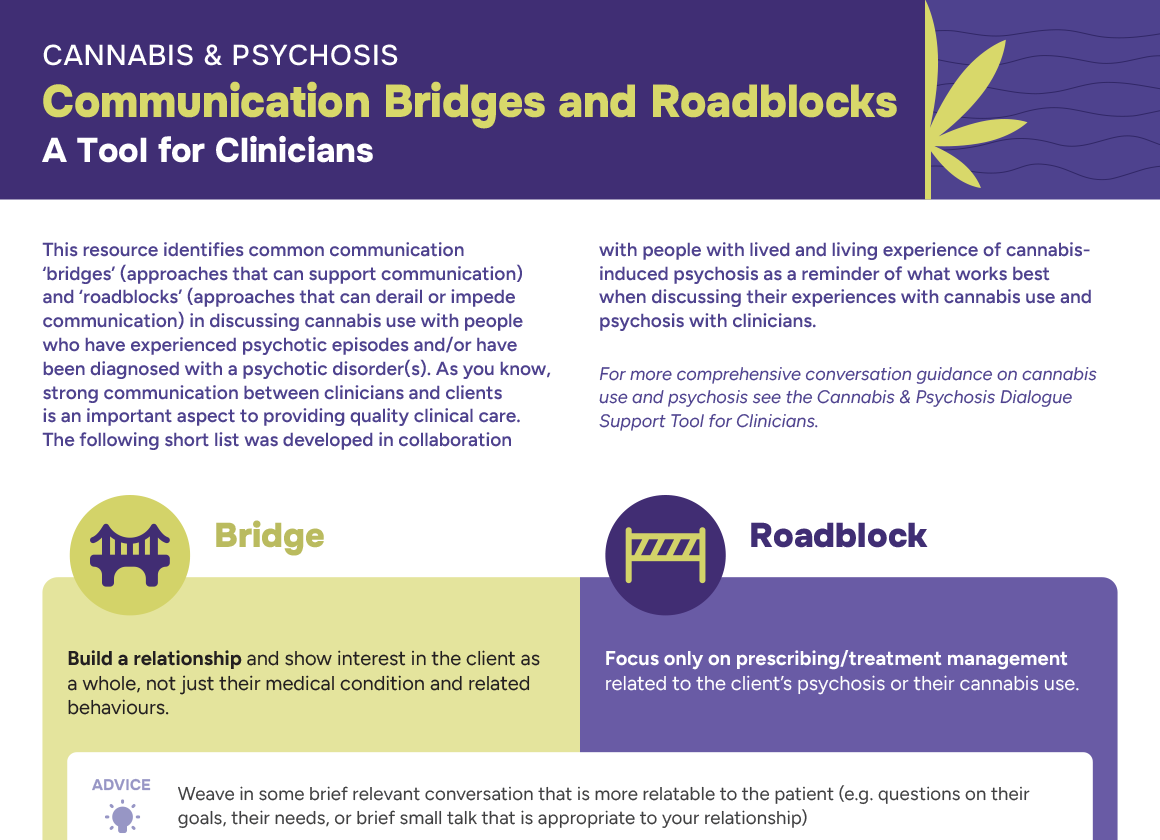
Clinical Toolkit
We Won’t Pass Judgements + Know Your Options Poster (EN) (FR)
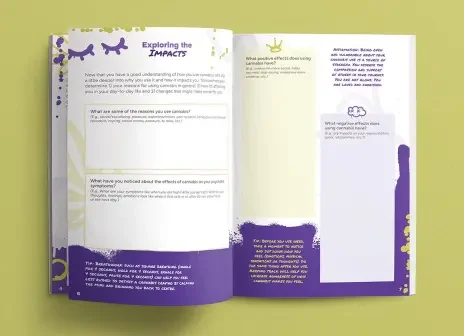
Patient Decision Aid: Reflection Journal (EN) (FR)
Results
The LRCUG-PSYCH knowledge mobilization initiative strengthened clinical dialogue, increased uptake of harm-reduction guidance, and improved communication between clinicians and youth at-risk of psychosis who use cannabis.
Together, these tools:
Enhanced awareness and implementation of LRCUG-PSYCH across Canada
Improved clinicians’ confidence discussing cannabis and psychosis
Offered bilingual, stigma-reducing resources for youth, clinicians, and community members
Made evidence more accessible and actionable through practical design
By transforming research into human-centered tools, CHUM and Changemark helped close the gap between evidence and everyday practice, empowering informed, non-judgemental conversations about cannabis and mental health.

Interested in learning more?
Let’s talk about how we can transform clinical evidence into accessible, practical tools that change practice and improve care.
